 Keepers
Protecting teeth at night
Night Guard: How to Protect Your Teeth From Night-Time Grinding
A night guard is a custom appliance worn during sleep to protect your teeth from the wear caused by grinding and clenching. Here is what it does, the types available, how it's made, and how to choose, reviewed by an orthodontist.
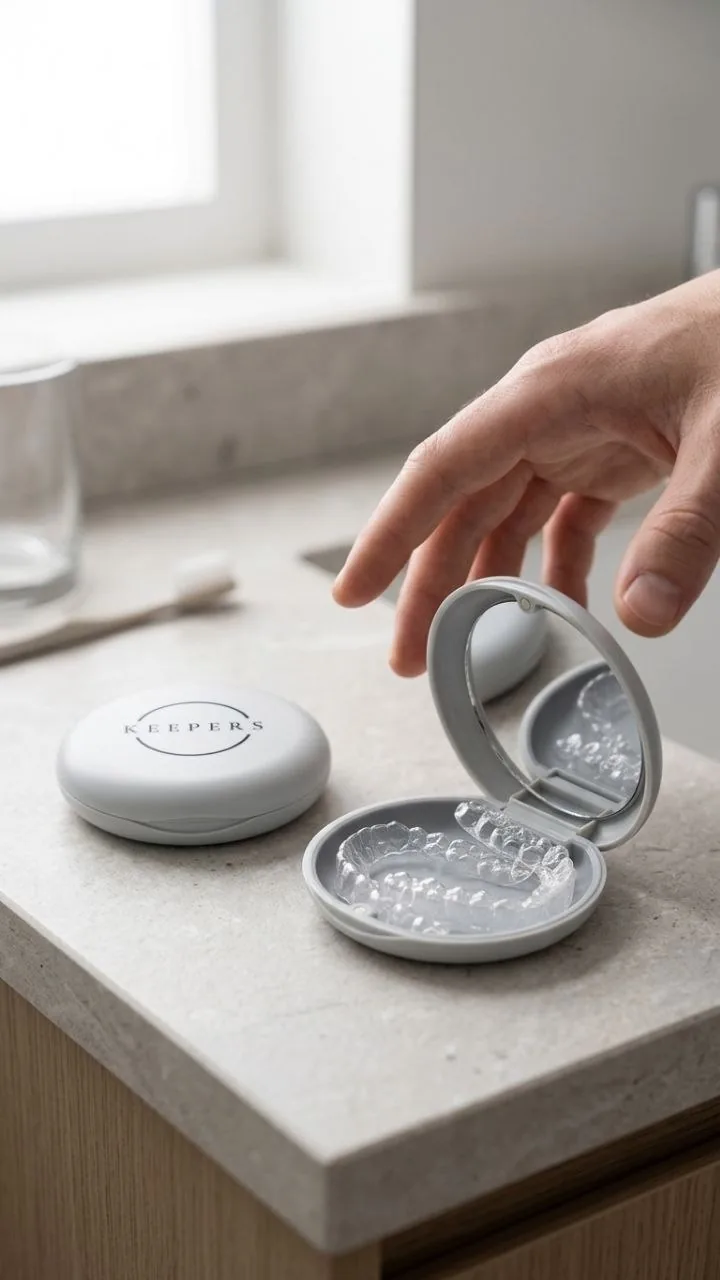
A Keepers custom-made clear appliance, produced from your 3D scan and delivered to you.
€85 per jaw (€140 for both jaws). Free 3D scan and free delivery in Latvia included.
What is a night guard?
A night guard is a removable, clear appliance you place over your teeth at night. It creates a protective layer between your upper and lower teeth, so the force from grinding and clenching lands on the guard instead of directly on your enamel, fillings, crowns and other dental work.
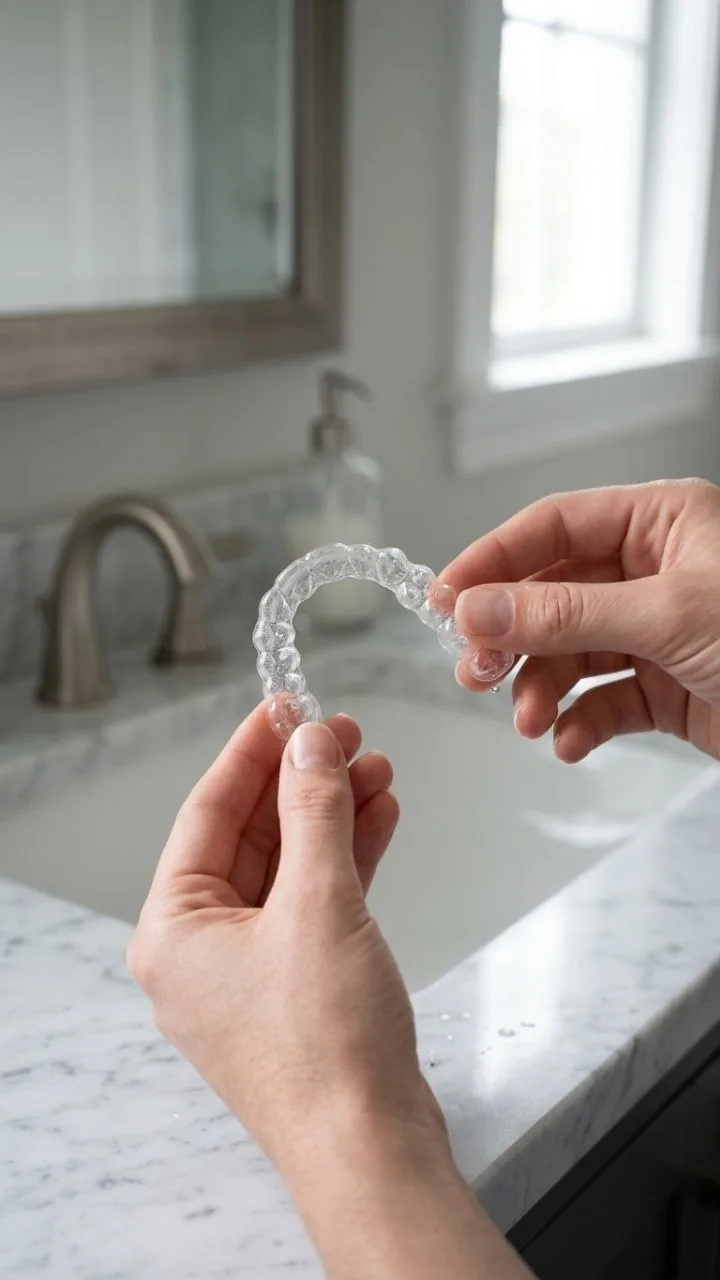
A clear, custom-made Keepers appliance, thin and comfortable to wear.
It helps to keep three things separate, because they are often confused:
- A night guard protects teeth from grinding and clenching wear during sleep.
- A retainer holds teeth in their current position after orthodontic treatment.
- A therapeutic splint is a clinician-prescribed device for specific jaw-joint or muscle goals.
These can overlap, but they are not interchangeable. The Keepers device is a single custom device that combines two of these jobs at once: it protects against night-time grinding wear and, at the same time, helps hold your teeth in position.
What is bruxism?
Bruxism is repetitive jaw-muscle activity: clenching or grinding the teeth. It comes in two forms: sleep bruxism, which happens during sleep and is not something you consciously do or can simply choose to stop, and awake bruxism during the day, which is more often linked to stress or concentration.[1] In otherwise healthy people it is not a disease in itself, but over time the repeated force can wear down tooth enamel, tire the jaw muscles, and damage existing dental work such as fillings and crowns.
Here is exactly what a night guard does, and what it does not do. What it does: it sits between your upper and lower teeth and takes the grinding force itself, so the wear lands on the guard instead of on your enamel, fillings and crowns, and your teeth stay protected. What it does not do: it does not make the grinding stop, and it does not fix the reason you grind. Think of it like a helmet: it does not stop the impact, but it absorbs it so what is underneath stays safe. If your grinding is strong or constant, a dentist or specialist can help look into the cause.
Do you grind your teeth at night?
Many people grind or clench during sleep without realizing it.[1] Common signs to look for:
- Flattened, chipped, or increasingly sensitive teeth
- Jaw-muscle tightness or soreness in the morning
- Dull headaches around the temples on waking
- A partner who hears grinding at night
- Fillings, crowns or veneers that keep chipping
If several of these sound familiar, a protective night guard is worth considering. If symptoms are strong, see the red flags lower down first.
Why protection matters
Frequent, forceful grinding or clenching over time can contribute to:
- enamel wear and a more sensitive tooth surface;
- chips, cracks, and damage to fillings or crowns;
- morning jaw-muscle soreness or headaches (in some people).
At the same time, tooth wear is not caused by grinding alone. Acids, diet, reflux and natural ageing can all contribute, so worn teeth on their own do not prove that someone grinds at night. Scientific reviews of tooth wear support this multifactorial picture.[7]
How a night guard helps
A well-fitting night guard helps in two main ways:
- it acts as a sacrificial surface, so the guard wears down instead of your enamel;
- it spreads the load across more teeth instead of concentrating it in a few spots.
A night guard protects your teeth, but it does not make the grinding stop or fix its cause. Research shows guards work mainly by protecting,[2][3] so the right way to judge one is by how well it shields your teeth, how comfortable it is, and how well it preserves your dental work,[5] not by whether it ends the grinding itself.
Boil-and-bite or custom: the real choice
In practice there are only two real options: an off-the-shelf boil-and-bite guard you mould at home, or a custom-made one built to your teeth. Everything else is detail.
| Boil-and-bite (off the shelf) | Custom-made | |
|---|---|---|
| Fit | Approximate, often bulky | Made to your teeth |
| Protection | Basic, can shift or loosen | Full coverage, stays put |
| Comfort | Variable | Thinner, easier to wear |
| Durability | Wears out faster | Lasts longer |
| Price | Cheapest up front | Higher, but protects better |
Where Keepers fits
Custom used to mean repeat clinic visits and a high bill. Keepers makes custom simple: from your 3D scan, your guard is made using EU-certified materials, following a process developed by an orthodontist, and delivered to you. Custom fit and protection, without the clinic chair time, and for less than a clinic.
Guards come in softer, firmer, or dual-layer materials. At Keepers we routinely recommend a hard, 1 mm-thin design: thin enough to be more comfortable than the bulkier night guards many people expect, yet firm enough to protect against grinding wear.[4] Worn on both jaws, it also helps keep your teeth from shifting, the same protective job a retainer does.
How a Keepers night guard is made
No messy impressions and no guesswork. Your guard is made from a digital 3D scan, which is more comfortable and avoids the distortion of traditional impression materials.[9]
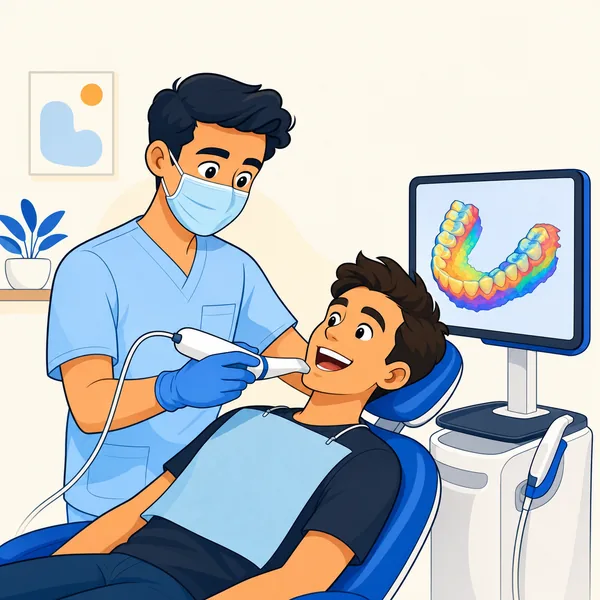
1. 3D scan
From your clinic, or we help arrange one.
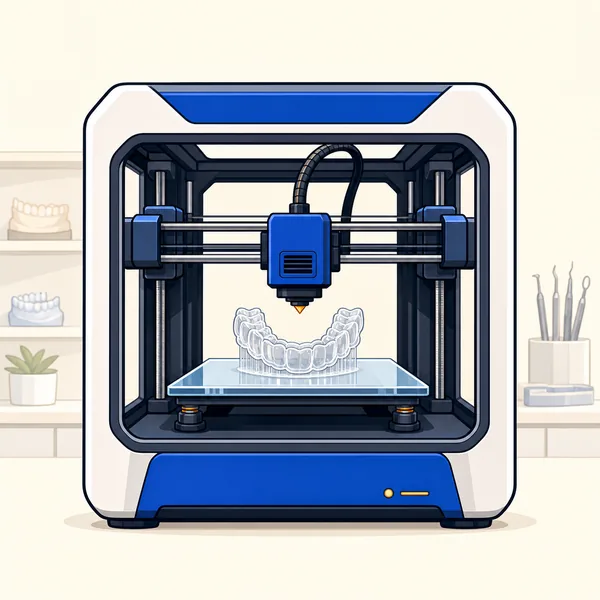
2. Review & make
Your scan is checked and your guard made using EU-certified materials and an orthodontist-developed method.

3. Delivered
Shipped with tracking to your nearest pickup point.
Care and replacement
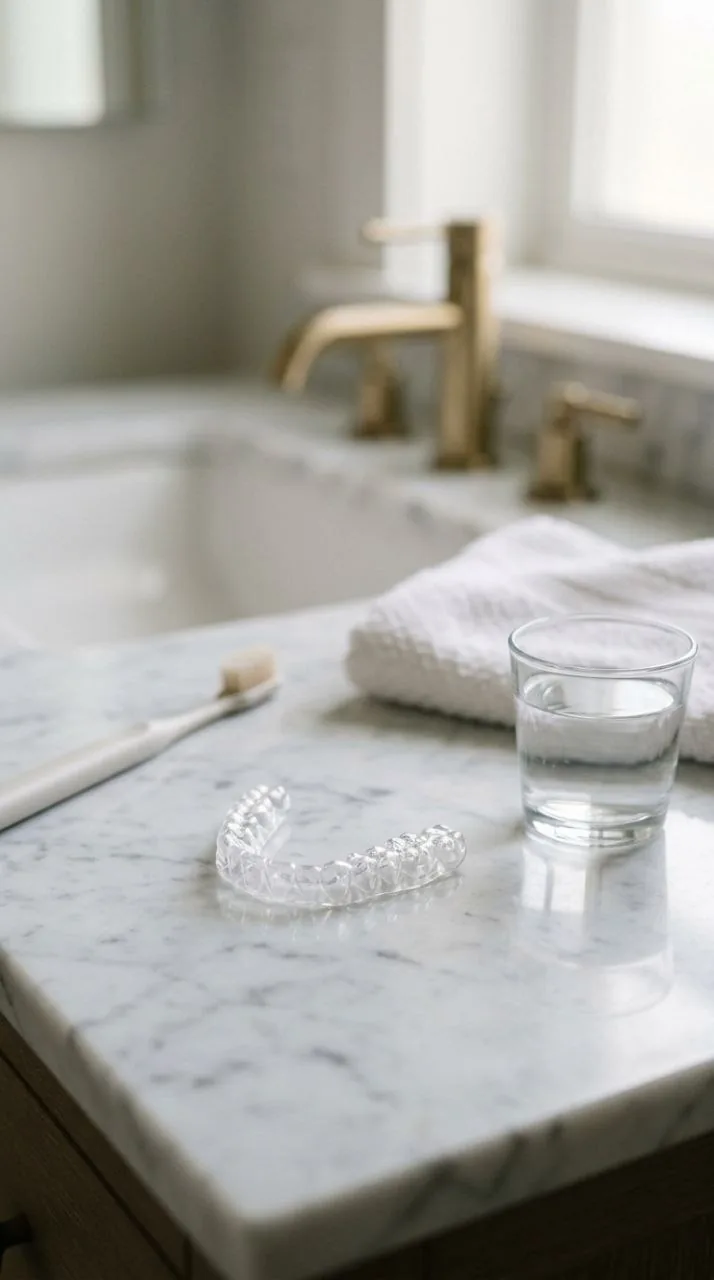
How long a guard lasts depends on the material, how hard you grind, and how you care for it. A simple routine keeps it clear, fresh, and protecting your teeth:
- Daily: rinse it after use, then brush gently with a soft toothbrush and mild soap under cool water.
- Weekly: once or twice a week, soak it with a retainer-cleaning tablet in lukewarm water, then brush lightly and rinse well.
- Store: keep it in a ventilated case when not worn, away from heat, sun, and pets.
- Avoid: hot or boiling water, toothpaste (too abrasive), alcohol mouthwash, bleach, and the dishwasher, which can warp or cloud it.
- Replace it: if it cracks, wears through, loses its fit, or smells despite cleaning.
When to see a dentist
Some signs call for a dentist or specialist rather than self-selection:
- significant or persistent jaw pain, or the jaw "locking";
- rapidly progressing tooth wear or repeatedly broken dental work;
- loud snoring or pauses in breathing during sleep (possible sleep apnea).[8]
In these cases a night guard alone does not diagnose or resolve the problem.
Reviewed by an orthodontist

This guide is reviewed under the guidance of orthodontist Dr. Igor Gribalsky, who has clinical experience in orthodontic treatment and retention care.
Frequently asked questions
Sources
This page is based on peer-reviewed scientific reviews and studies. Key sources:
- Global Prevalence of Sleep Bruxism and Awake Bruxism in Pediatric and Adult Populations: A Systematic Review and Meta-Analysis. J Clin Med. 2024. PMID 39064299.
- Macedo CR, et al. Occlusal splints for treating sleep bruxism (tooth grinding). Cochrane Database Syst Rev. 2007. PMID 17943862.
- Managements of sleep bruxism in adult: A systematic review. Jpn Dent Sci Rev. 2022. PMID 35356038.
- Comparative analysis of different types of occlusal splints for the management of sleep bruxism: a systematic review. BMC Oral Health. 2024. PMID 38182999.
- Effects of occlusal splint therapy on opposing tooth tissues, filling materials and restorations. J Oral Rehabil. 2021. PMID 34320246.
- Occlusal splint or botulinum toxin-A for jaw muscle pain in probable sleep bruxism: a randomized controlled trial. J Dent. 2024. PMID 39510242.
- Diagnosing tooth wear, a new taxonomy (TWES 2.0). J Oral Rehabil. 2020. PMID 32274827.
- Sleep bruxism and obstructive sleep apnea: association, causality or spurious finding? A scoping review. Sleep. 2022. PMID 35443064.
- Accuracy of conventional versus digital impression techniques: a systematic review. Evid Based Dent. 2024. PMID 39134687.
This is general educational information, not medical advice. For diagnosis or treatment of grinding, jaw pain, or sleep problems, consult a dentist or an appropriate specialist.
Get Started
Get your custom night guard
Fill in the form and we'll contact you with the next steps and pricing.
Message Sent!
Thank you for reaching out. We'll be in touch within 1-2 business days with your next steps.